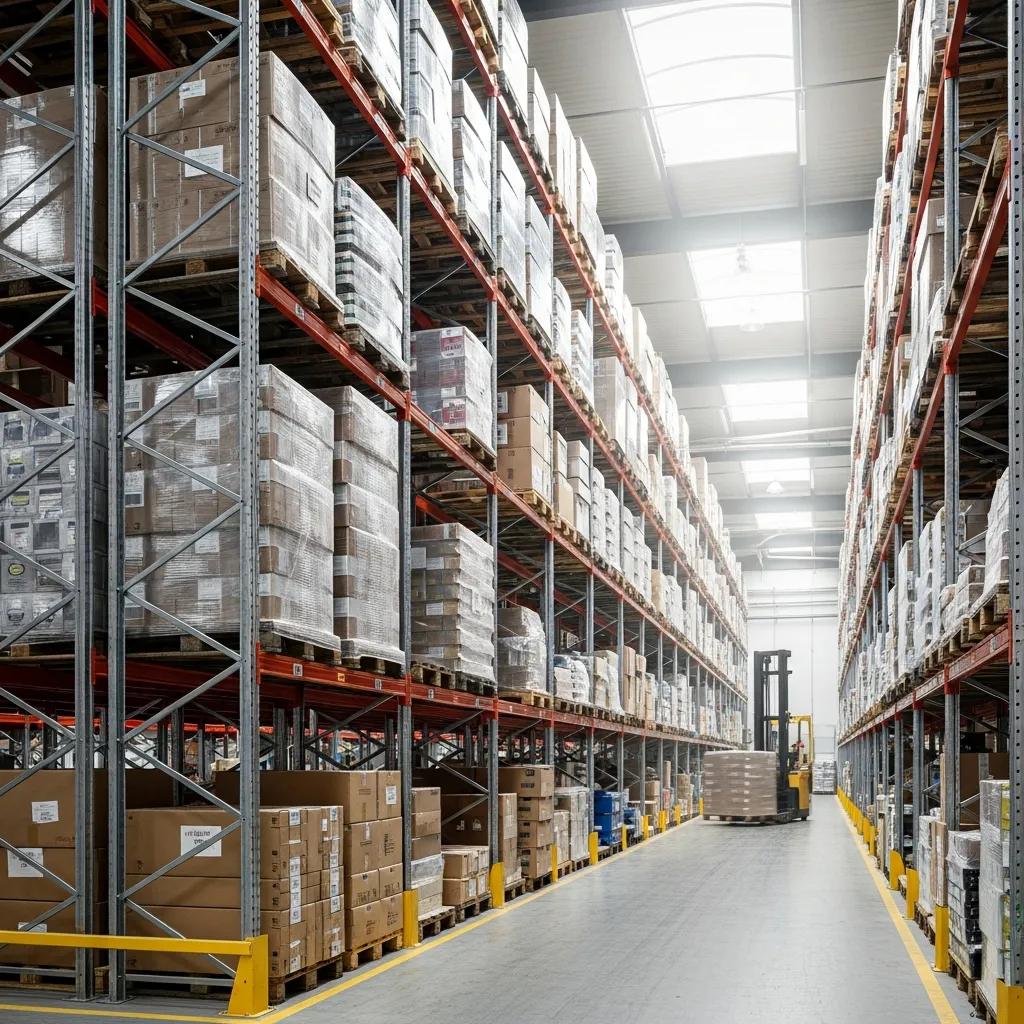
Expert Warehouse Rack Inspection Services in Minneapolis, Minnesota
Expert Warehouse Rack Inspection Services in Minneapolis, Minnesota: Ensuring Safety, Compliance, and Operational Efficiency

In the bustling environment of Minneapolis warehouses, ensuring the safety and compliance of storage systems is paramount. Warehouse rack inspections are critical for maintaining operational efficiency and preventing accidents. This article delves into the importance of professional warehouse rack inspections, the comprehensive processes involved, and how Rusch Rack Inspections leverages decades of experience to provide tailored solutions for local businesses. Readers will learn about OSHA and RMI (Rack Manufacturers Institute) standards, the inspection process, and the benefits of training programs for staff. By understanding these elements, warehouse owners and managers can make informed decisions to enhance safety and compliance in their operations.
Why Are Professional Warehouse Rack Inspections Critical for Minneapolis Businesses?
Professional warehouse rack inspections are essential for ensuring safety and compliance within the Minneapolis business landscape. These inspections help identify potential hazards, ensuring that storage systems meet regulatory standards and operate efficiently. Neglecting regular inspections can lead to severe consequences, including accidents, costly downtime, and legal liabilities.
Further emphasizing this point, recent research highlights the critical role of regular inspections in preventing accidents and ensuring the integrity of pallet racking systems.
Importance of Pallet Racking Inspection for Warehouse Safety
streamlining warehouse operations with tactics such as optimized pallet racking. Businesses must can be an accident waiting to happen. Pallet racking inspection highlights potential
SOME EXPERIENCES FROM THE PRACTICE ABOUT RESULTS AND IMPORTANCE OF WAREHOUSE RACKING INSPECTION, R Vujanac, 2024
What OSHA and ANSI-RMI Standards Must Minneapolis Warehouses Follow?
Minneapolis warehouses must adhere to specific OSHA and RMI standards to ensure safety and compliance. OSHA regulations outline the general requirements for workplace safety, while RMI standards provide detailed guidelines for the design, maintenance, and inspection of storage racks. Compliance with these standards not only protects employees but also enhances operational efficiency by minimizing the risk of rack failures.
How Do Rack Inspections Prevent Accidents and Costly Downtime?
Regular rack inspections play a crucial role in accident prevention and minimizing downtime. While specific statistics vary, equipment failures, including rack collapses, are a known cause of workplace accidents. By conducting thorough inspections, potential issues can be identified and addressed before they lead to accidents, ultimately saving businesses from costly repairs and lost productivity.
What Does Our Comprehensive Rack Inspection Process Include?

Rusch Rack Inspections offers a comprehensive rack inspection process designed to ensure safety and compliance. This process includes a detailed assessment of the storage systems, identification of potential hazards, and recommendations for corrective actions.
This comprehensive approach aligns with the broader academic focus on developing robust monitoring procedures for the technical parameters of warehouse racks, especially in complex storage environments.
Monitoring Technical Parameters for Warehouse Rack Safety
The main objective of the paper is to develop a theoretical basis and a concept of the monitoring procedure of the technical parameters of warehouse racks, focusing on high-bay warehouses and high storage warehouses. Author describes potential plan for conducting his research based on simulation methods and, in the longer term, to conduct research based on existing objects (high-bay warehouses and high storage warehouses).
Securing of safety by monitoring of technical parameters in warehouse racks, in high-bay warehouses and high storage warehouses-literature review of the problem, M Kostrzewski, 2017
